


This month we have a guest post from SOMA Breath founder, Niraj Naik.
Children with ADHD can sometimes struggle with focus, emotional regulation, and overwhelm — but simple breathing techniques may offer valuable support.
Children with ADHD often experience challenges with focus, emotional regulation, impulsivity, and overstimulation. These difficulties can affect all aspects of their lives including learning, classroom participation, and everyday routines at home.
While ADHD support often includes behavioural strategies, educational support, medications, and medical care, what if your child could be supported by something they are already doing all day every day?
Breathing exercises are being explored more and more as a supportive tool for nervous system regulation and emotional balance, making it a great option for parents and children struggling with ADHD.
By learning simple breathing techniques, children are better able to slow down, reduce overwhelm, calm themselves, and transition into a more balanced state that better supports attention and learning both in and out of the classroom!
Some parents may want to explore more structured breathwork approaches to better understand nervous system regulation and emotional resilience. Learning more through SOMA Breathwork certification can provide deeper insight into the relationship between breathing and emotional regulation.

Breathing impacts the autonomic nervous system, which is responsible for how stressed or relaxed we feel. If children feel over stimulated or stressed, it can be difficult to concentrate and regulate their emotions and actions. Slow breathing has been shown to help in promoting healthier nervous system functioning and better self-regulation.
Potential benefits of calming breath work for children include:
When the body is in a heightened stress state, the brain prioritises survival responses rather than learning and concentration, even when the survival is perceived and there is no immediate real danger to the child’s well-being.
Children learn best when they feel calm, supported, safe, and regulated. Stress and emotional dysregulation can interfere with attention, memory, decision making, and information processing.
Deep breathing exercises can help trigger the body’s relaxation response, helping achieve a more relaxed state physically and mentally.
In a study conducted at Stanford, one minute of deep breathing by children was enough to lower their heart rates and produce physiological measures associated with stress resilience.
In addition to having ADHD, many kids also struggle with emotional dysregulation, frustration, and even anxiety.
Techniques that encourage children to breathe when feeling anxious could allow children to stop before acting out, handle overwhelming emotions, and become emotionally balanced once again. In addition, practicing these techniques over time will enable children to recognize the link between their emotions, bodily responses, and breathing.
The best breathing exercises for children are short, easy to follow, fun, and engaging.
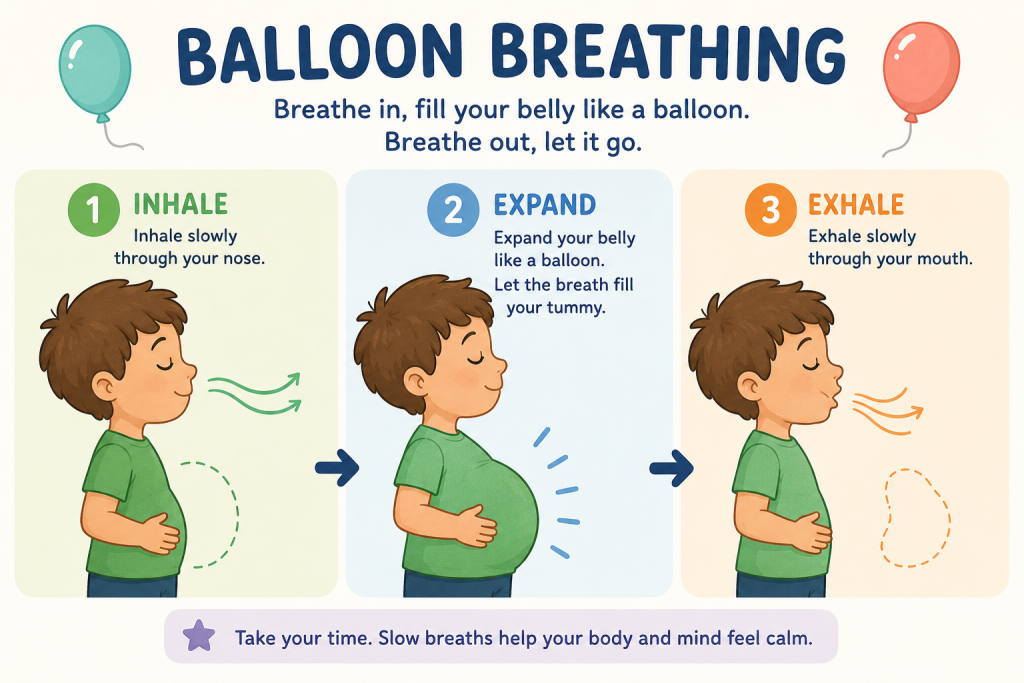
The balloon breathing technique is an easy way to teach kids how to breathe deeply. Most individuals tend to take quick, shallow breaths, drawing air only into their chests. Shallow breathing can lead to heightened levels of anxiety and emotional instability. Through balloon breathing, children learn to take longer breaths, which could potentially promote relaxation.
How to do it:
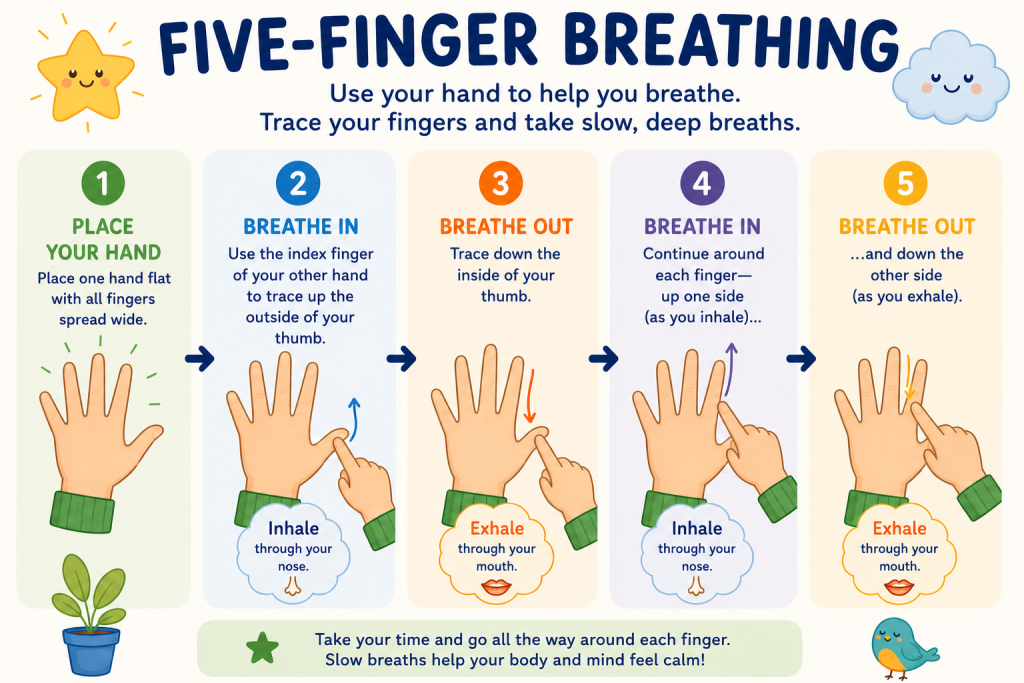
The five-finger breathing exercise involves breathing deeply as you use your hands and senses, making this breathing technique very effective when dealing with kids who have trouble staying still or focusing while doing relaxation activities. As kids trace along their fingers and synchronize their breathing pattern with that movement, it will hopefully help them relax physically and mentally.
How to do it:
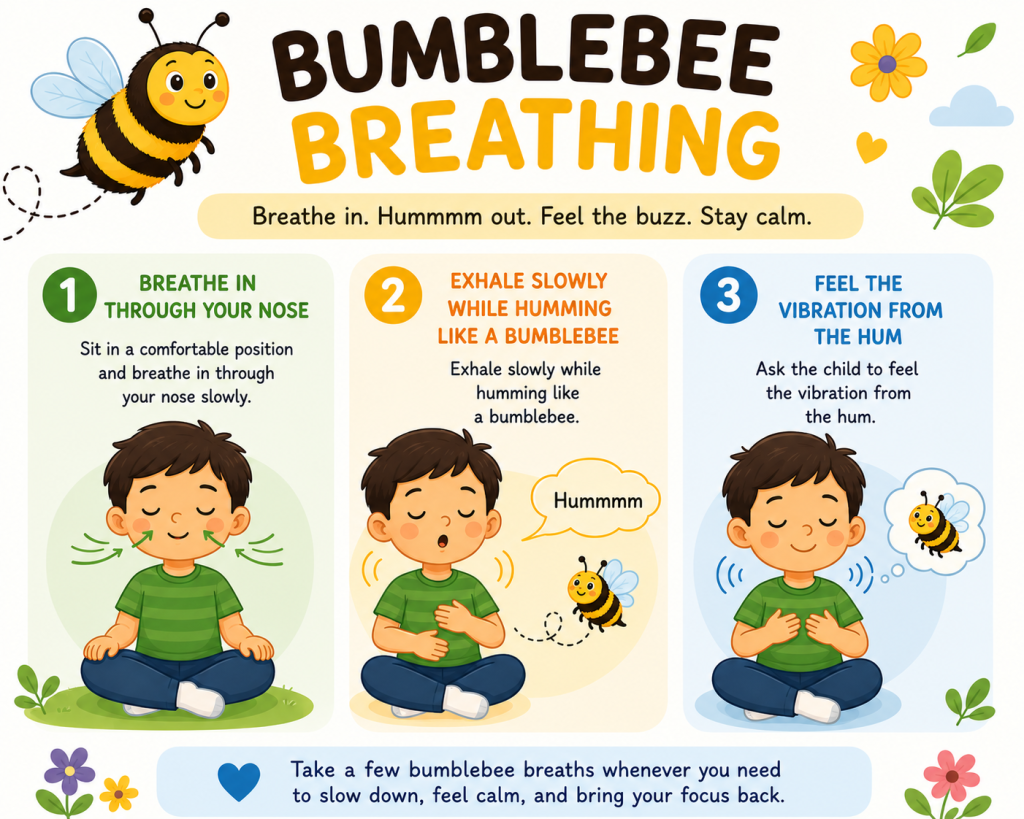
Bumblebee breathing is an exercise that helps kids slow down and center themselves on their breathing by using the vibrations from humming. Humming is a sensory component that is very relaxing for young kids who find the sound of their own voice very soothing. It can be beneficial in helping the kid relax, self-regulate, and concentrate on breathing during times of high emotion or anxiety.
How to do it:
Breathing techniques taking between one to three minutes are more beneficial for younger children as their attention spans cause them to lose interest and focus quickly. The goal is not an extended breathwork practice, but rather to introduce techniques that are quick and easily accessible for the child.
Visualisation and imaginative play can make breathing exercises more enjoyable. You can find breathwork and mindfulness stories on the internet or make up your own! Try things like “Imagine you have a big beautiful flower in your hand! Now take a big long sniff! Okay now blow off all the petals and make a wish!”
Practicing breathing exercises at specific times such as before school, studying, or sleeping endures that these practices are woven through your day. Children with ADHD thrive when they know what to expect when, so setting a time and routine for breathwork and mindfulness exercises helps the child unwind and be prepared for the practice.
Children tend to repeat what they see. Watching adults practice and model breathwork techniques with them makes the task more fun!
Young children tend to be more excited about participating in creative and physically active breathing exercises.
Some effective breathing exercises for preschool children / those attending nursery:
The goal for breathing exercises at this age isn’t to have perfect form, instead it’s about the connection between breathing and relaxation and allowing your child to develop a new skill in self regulation.
Having your child practice mindfulness activities alongside breathing exercises can help extend the benefits of both in your child’s life.
Helpful activities may include:
Research available through the National Institutes of Health suggests mindfulness-based interventions may support attention and emotional regulation in children with ADHD.
While breathing techniques are not a replacement for professional ADHD support, they can help children feel calmer, more focused, and better able to manage overwhelming moments.
These small routines can provide children with the necessary skills to regulate their reactions on both an emotional and physical level.
Share this article